Why the Neck Matters After a Concussion
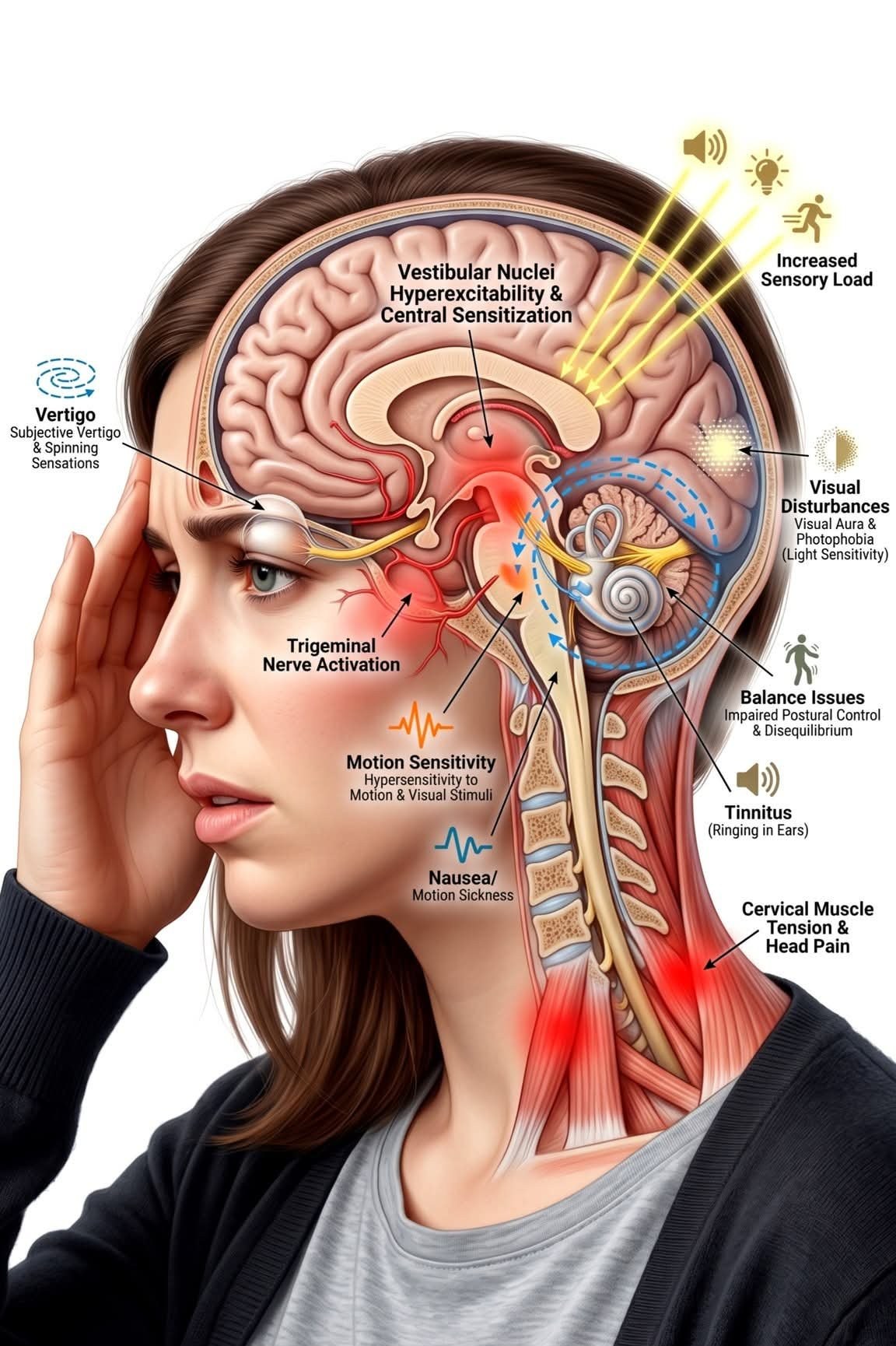
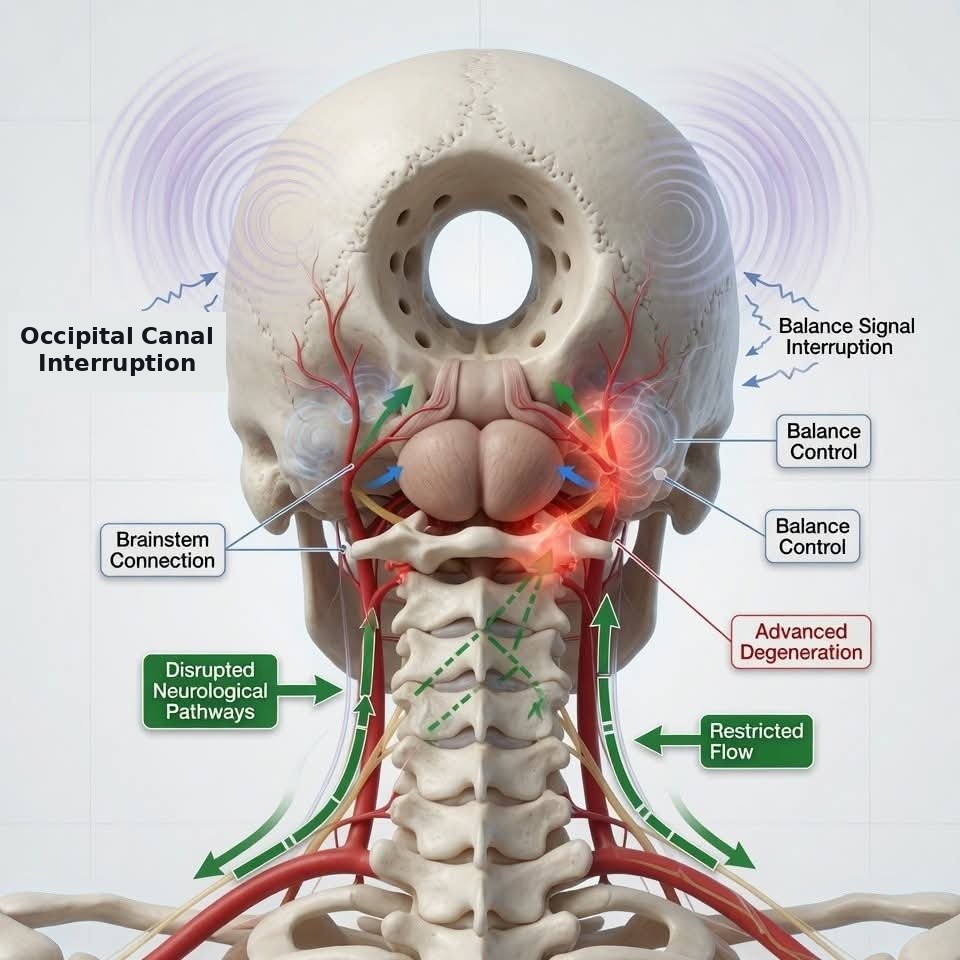
A concussion rarely injures the brain alone. The same force that shakes the head whips the neck — and the upper cervical spine is one of the vestibular system's main sources of information. Receptors in the joints and muscles of the upper neck constantly tell the brain where the head is in space. The vestibular nuclei in the brain stem combine those signals with input from the inner ear and the eyes to keep you balanced, steady and clear.
When the neck is injured, its signals become distorted. The brain receives conflicting information — the ear says one thing, the neck another — and the result is the classic post-concussion picture: dizziness, vertigo, motion sensitivity, visual disturbances, tinnitus, nausea, brain fog and headaches that will not settle. The nervous system, sensitized by the injury, starts to overreact to normal sensory load: light, sound, movement, screens.
Treatment at this clinic addresses that mechanism. Neuromuscular Specific Treatment (NST) and Neurofunctional Integration Therapy work gently on the upper cervical spine and the soft tissues around it — no forceful manipulation — while neurosensorimotor reflex integration (MNRI®) helps the nervous system rebuild the primitive balance and stabilization patterns the injury disrupted. Piotr Gorecki has practiced manual and massage therapy since 1993.
Important: if you suspect a fresh concussion, have it assessed medically first. This therapy complements medical care — it treats the neck and nervous-system side of the recovery, and it is often the missing piece when symptoms linger after the medical side has cleared you.
Symptoms this work addresses
- Dizziness, vertigo and spinning sensations
- Loss of balance, unsteadiness, impaired postural control
- Brain fog, memory and concentration problems
- Headaches and head pressure after concussion or whiplash (see also Headaches & Migraines)
- Neck pain, stiffness and tension after the injury
- Motion sensitivity and motion sickness
- Visual disturbances, light sensitivity, visual aura
- Tinnitus and ear pressure
- Nausea, fatigue and sensory overload